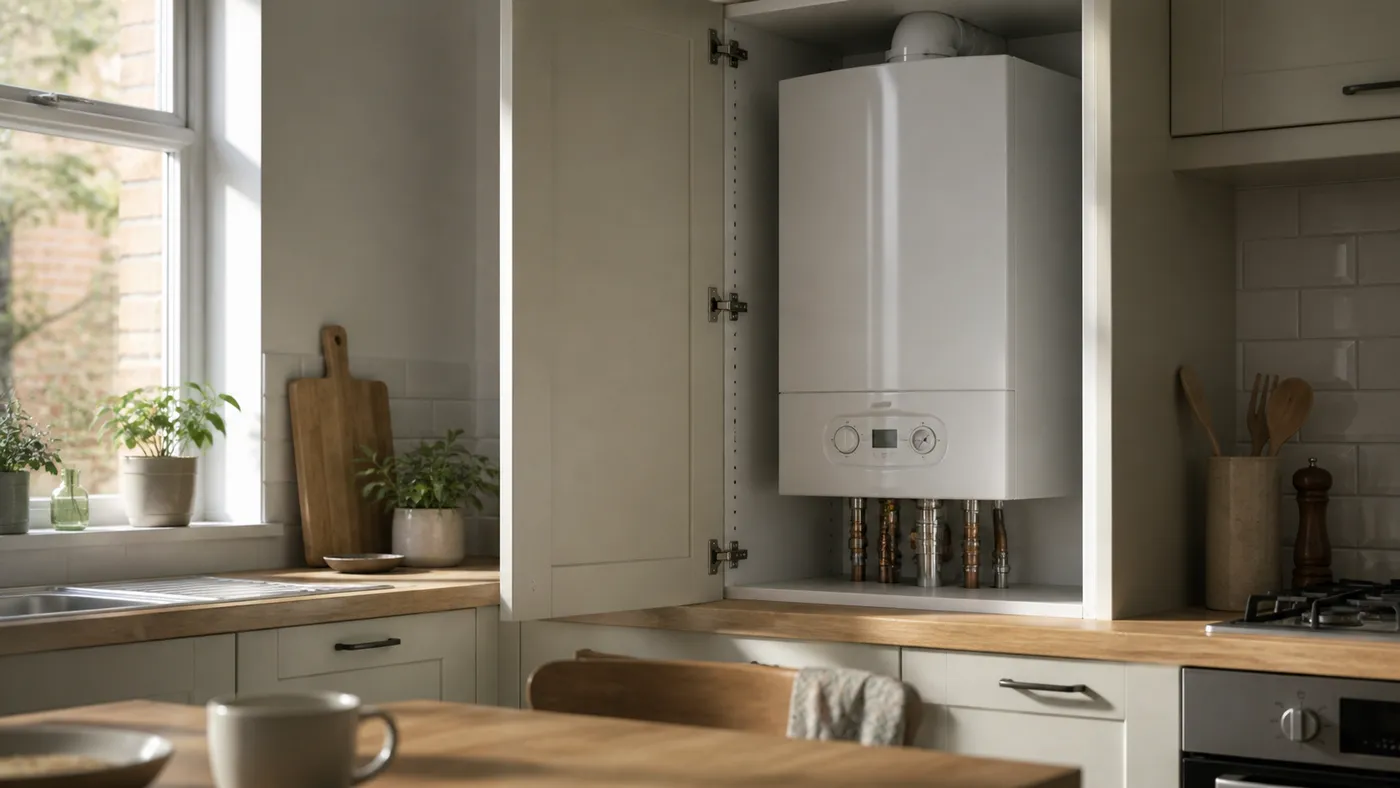
Find out if a power flush is a necessary step with your new boiler installation or an extra cost you can potentially avoid.
Should a Power Flush Be Part of Your New Boiler Installation?
A power flush is often recommended alongside a new boiler, but it is not automatically required in every situation, and this article is about how to tell when yours can be left out. If your radiators already show the symptoms of sludge, start with our guide to whether you need a power flush before a new boiler is fitted. The right decision depends entirely on the condition of your existing pipework and radiators.
What is a Power Flush and Why is it Considered?
A power flush is a process that cleans sludge, rust, and debris from the water in your central heating system. Over many years, these contaminants can build up inside radiators and pipes. If you fit a new, efficient boiler to an old, dirty system, that sludge can quickly circulate into the new unit. This can cause damage, reduce efficiency, and in some cases, invalidate the manufacturer's warranty if the system water is not clean. A power flush is priced separately from the boiler itself and is provided as a quote following a survey, not as a fixed figure.
Clear Signs Your System Needs a Power Flush
There are several symptoms that indicate your heating system is dirty and would benefit from a flush before a new boiler is fitted.
- Radiators are cold at the bottom but hot at the top. This is a classic sign of sludge settling in the bottom of the radiator.
- Some radiators take a very long time to heat up or barely get warm while others are fine.
- Your old boiler was noisy, frequently broke down, or suffered from short-cycling (turning on and off rapidly).
If you recognise these issues, a power flush is likely a worthwhile investment to protect your new boiler and restore full heating performance.
When a Power Flush May Not Be Necessary
A power flush is not a legal requirement, and there are situations where it may not be needed. If your existing system is relatively young and has been well-maintained with regular servicing, and you have experienced none of the symptoms listed above, the system may already be clean. A well-maintained system with inhibitor added periodically is less likely to have problematic sludge levels.
How a Professional Assessment Works
Reputable heating engineers will not recommend a power flush without good reason. During your free survey for a new boiler, the engineer should assess your system. A key part of this is often taking a water sample from a radiator. This simple check can show the level of contamination and help determine if a flush is advised. This evidence-based approach ensures the recommendation is based on the actual condition of your system, not just as an automatic add-on.
Making the Final Decision
The goal is to install your new boiler into a clean system to ensure its longevity, efficiency, and to keep the warranty valid. If the survey and water sample show significant sludge, a power flush is a sensible protective measure. If the system is clean, you can proceed with the installation without this extra service. Always use a Gas Safe registered engineer who will follow the Benchmark commissioning checklist, which includes assessing system cleanliness.
Frequently asked questions
Will not getting a power flush invalidate my new boiler's warranty?
Many boiler manufacturers require the system water to meet certain cleanliness standards for the warranty to be valid. If dirty water from an old system damages the new boiler, a claim could be rejected. A professional survey, including a water sample check, will determine if a flush is needed to protect your warranty.
How do I know if I really need one?
You should rely on the assessment from a qualified engineer during your free survey. They will look for physical symptoms like cold spots on radiators and can test a water sample for sludge. They should only recommend a power flush if there is clear evidence your system requires it.
Is the power flush price included in my boiler quote?
Typically, a power flush is a separate service quoted individually after the initial survey. Reputable companies provide a fixed quote for the flush itself once they have assessed your system's need for it, rather than including it as a mandatory fixed cost with every boiler installation.